
Is AI Replacing Developers? What 2026 Really Shows
AI is changing software development, but it has not replaced software developers in the way many early predictions suggested. Coding tools can generate code, automate repetitive tasks and help engineers work faster. However, software engineering involves far more than writing code.
Developers still need to design systems, understand requirements, test software, review AI-generated code, solve unexpected problems and make decisions about what should actually go into production.
The real story is not that developers have disappeared. It is that their work is changing.
What Happened to the Prediction That AI Would Replace Developers?
When generative AI became widely popular, one of the strongest predictions was that companies would soon need far fewer software developers.The reasoning seemed simple: if AI could write code faster than humans, companies could reduce the size of their engineering teams.That assumption overlooked an important part of software development.
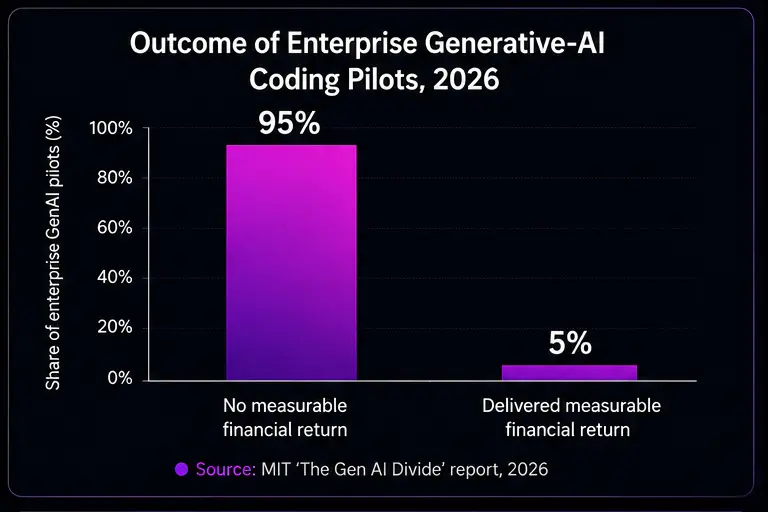
Writing code is only one stage of building software.A working application also needs architecture, testing, security, debugging, integration, maintenance and decisions based on the specific business or technical environment.AI can assist with many of these activities, but generating code does not automatically solve the larger engineering problem.
What Can AI Coding Tools Actually Do?
Modern AI coding tools can be useful for a wide range of development tasks.
They can help developers:
- Generate boilerplate code
- Suggest implementations
- Explain existing code
- Create test cases
- Find possible bugs
- Write documentation
- Convert code between programming languages
- Build an initial version of a feature
- Suggest ways to improve existing code
For an experienced developer, this can remove a lot of repetitive work.Instead of starting from an empty file, a developer can ask an AI tool to produce an initial implementation and then review and improve it.That can make development faster.But faster code generation does not mean that the entire engineering process has been automated.
Why AI-Generated Code Still Needs Human Review
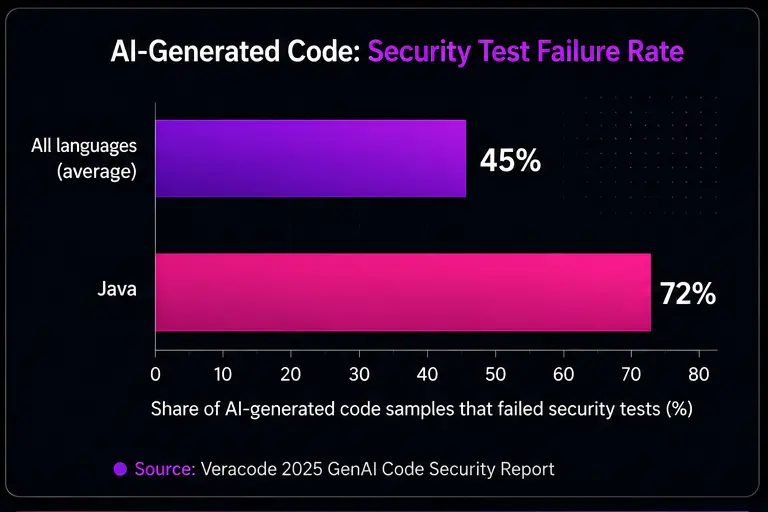
AI can produce code that looks convincing while still being unsuitable for a real application.A generated solution may misunderstand a requirement, make an incorrect assumption about an existing system or overlook an unusual situation.Security is another concern.
Software Engineering Is More Than Writing Code
Consider an application that processes financial information.An AI tool might be able to generate a function that calculates points, payments or account values. But someone still needs to determine whether the calculation follows the application’s requirements and applicable rules.The same problem appears in systems connected to physical hardware.
AI may generate code for data processing or dashboards, but problems such as sensor behavior, network instability or unexpected hardware conditions can require knowledge of the real environment.These situations show why software engineering cannot be reduced to code generation.An engineer needs to understand the system around the code.
What Does AI Mean for the Future of Software Development?
The future is unlikely to be a simple competition between humans and AI.
A more realistic model is collaboration.AI can handle parts of the implementation process while developers provide direction, context and oversight.This could allow engineering teams to complete certain tasks more quickly and spend less time on repetitive work.But it also creates new responsibilities.
Developers need to understand the limitations of AI tools, verify their output and know when an AI-generated solution should not be trusted.Companies also need to consider how they train new developers if AI takes over some of the basic tasks traditionally used to build experience.
What Does AI Mean for Junior Developers?
The impact on junior developers may be more complicated than simple job replacement.AI is particularly useful for repetitive and straightforward programming tasks. Those same tasks have traditionally helped junior developers gain practical experience.A new developer might learn by writing simple functions, fixing basic bugs and gradually taking on more difficult work.
If AI handles more of that basic work, companies may need to rethink how junior developers gain experience.This does not mean junior developers are no longer needed.It means the skills expected from them may change.
A developer who knows how to use AI but cannot understand the code it produces will still have difficulty solving complex problems. Strong programming fundamentals, debugging skills and an understanding of software architecture remain important.
How Are Experienced Developers Using AI?
Experienced developers are increasingly using AI as an assistant rather than treating it as an authority.
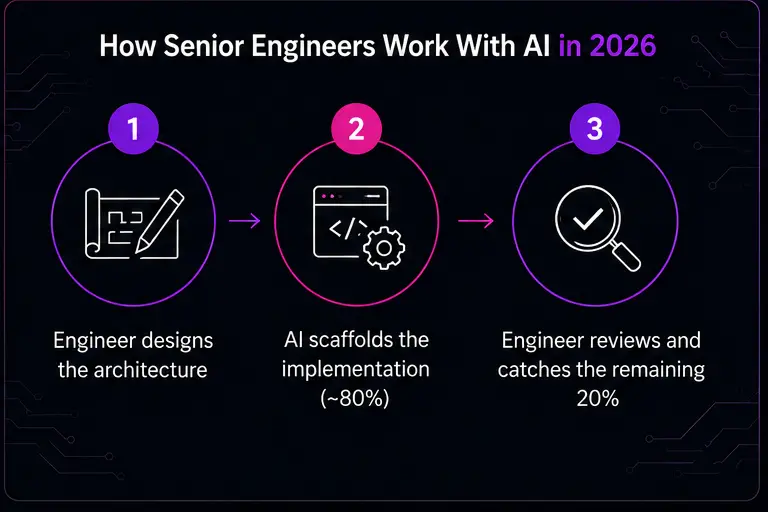
A practical workflow can look like this:
1. Define the problem
The developer decides what needs to be built and how the feature should fit into the existing system.
2. Ask AI for an initial implementation
The AI tool can generate code, suggest an approach or handle repetitive parts of the task.
3. Review the output
The developer checks whether the code actually solves the problem and looks for incorrect assumptions, security issues and edge cases.
4. Test and improve it:
The code is tested and modified until it works correctly within the real application.
This changes the role of the developer.Instead of manually writing every part of the implementation, engineers can spend more time directing, reviewing and improving AI-generated work.That requires technical judgment, not less of it.
Is AI Responsible for Developer Layoffs?
Technology layoffs and AI-driven automation should not automatically be treated as the same thing.Companies reduce staff for many reasons, including restructuring, changing business priorities, reducing costs and shifts in market demand.
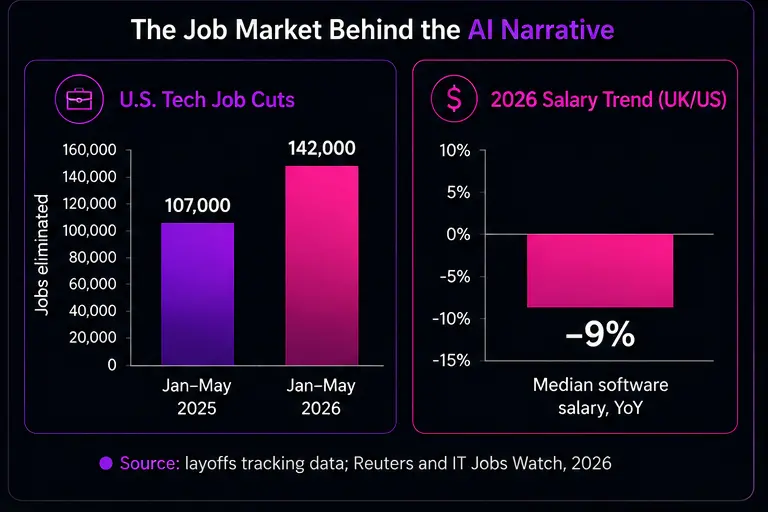
AI can contribute to some workforce decisions when companies automate repetitive tasks. But a company’s decision to reduce its workforce does not by itself prove that AI has replaced the affected developers.The more useful question is what work is actually being automated.
If AI performs a repetitive task that previously required several hours of manual work, that is automation.If an AI system can independently handle the complete responsibilities of an experienced software engineer, including architecture, debugging, security, communication and accountability, that would be genuine job replacement.Those are very different situation.
Is AI Changing the Value of Software Developers?
Yes, As AI becomes better at routine coding, developers may spend less time manually producing repetitive code.At the same time, other skills become more valuable.
These include:
- System architecture
- Debugging
- Software testing
- Cybersecurity
- Requirements analysis
- Problem-solving
- Code review
- Technical decision-making
- Communication and collaboration
The developer who can understand why a piece of code works, where it might fail and how it should be tested provides value that goes beyond code generation.
What Does This Mean for the Future of Software Development?
The future is unlikely to be a simple competition between humans and AI.A more realistic model is collaboration.AI can handle parts of the implementation process while developers provide direction, context and oversight.This could allow engineering teams to complete certain tasks more quickly and spend less time on repetitive work.But it also creates new responsibilities.
Developers need to understand the limitations of AI tools, verify their output and know when an AI-generated solution should not be trusted.Companies also need to consider how they train new developers if AI takes over some of the basic tasks traditionally used to build experience.
What Skills Should Developers Focus On?
Developers do not need to compete with AI at producing code line by line.Instead, they should focus on becoming better at understanding problems and evaluating solutions.Strong programming fundamentals remain important. So do system design, testing, debugging and security.
Developers should also learn how to work effectively with AI coding tools.The goal is not to blindly accept whatever AI produces. The goal is to use AI where it helps while maintaining enough technical knowledge to recognize when its output is wrong.That combination is likely to be more valuable than either manual coding or AI usage alone.
AI & Software Development Questions
Will AI replace software developers?
AI is likely to automate more software-development tasks, but that is different from eliminating software developers. Human engineers are still needed for architecture, testing, security, debugging and technical decision-making.
Can AI write software?
Yes. AI coding tools can generate functions, applications, documentation, tests and other software components. However, generated code still needs to be reviewed, tested and adapted to the actual project.
Is AI-generated code safe?
Not automatically. AI-generated code can contain errors or security weaknesses, so developers should review and test it before using it in production.
Are junior developers at risk because of AI?
Junior developers may be affected because AI can perform some repetitive tasks that traditionally helped them gain experience. Strong programming fundamentals and the ability to understand and evaluate AI-generated code remain valuable.
Will software engineers still be needed?
Yes. Software engineering involves much more than coding. Designing systems, understanding requirements, managing risks, debugging and taking responsibility for production software still require human judgment.
Should developers learn AI coding tools?
Learning to use AI coding tools can be useful as they become part of modern development workflows. Developers should learn both how to use these tools and how to critically evaluate their output.
Conclusion
AI has changed software development, but the evidence does not support the idea that software developers have simply become obsolete.The bigger shift is in the nature of the job. AI can generate code and automate repetitive work, while developers increasingly focus on architecture, review, testing, security and problem-solving.AI can write a lot of code.Developers still need to decide whether that code is correct, secure and worth shipping.
References
- U.S. Bureau of Labor Statistics — Software Developers, Quality Assurance Analysts, and Testers
Software developers ki employment outlook, salaries aur 2024–2034 projections ke liye. BLS ke mutabiq software developer employment 2024–2034 mein 16% grow hone ka projection hai.
BLS — Software Developers, QA Analysts, and Testers - U.S. Bureau of Labor Statistics — Artificial Intelligence, Information Technology, and Employment, 2024–34
AI aur employment projections ke relationship ke liye useful official U.S. government source.
BLS — Artificial Intelligence, Information Technology, and Employment - U.S. Bureau of Labor Statistics — Computer Programmers
Ye source particularly useful hai kyunki BLS specifically discuss karta hai ke AI aur automation repetitive programming tasks ko automate kar sakte hain, jabke software-developer roles ka outlook different hai.
BLS — Computer Programmers - Veracode — 2025 GenAI Code Security Report
AI-generated code ki security ke liye strong primary source. Veracode ne 100+ large language models ko Java, Python, C# aur JavaScript par test kiya aur report mein security-testing results publish kiye.
Veracode — 2025 GenAI Code Security Report - OWASP — OWASP Top 10:2021
AI-generated code mein security vulnerabilities discuss karte waqt OWASP Top 10 ko authoritative security reference ke taur par use kiya ja sakta hai. Ismein Broken Access Control, Cryptographic Failures, Injection, Insecure Design aur Security Misconfiguration jaise risks included hain.
OWASP Top 10:2021 - U.S. Bureau of Labor Statistics — Occupations with the Most Job Growth
Software developers ke projected employment growth aur new jobs ke official statistics ke liye. BLS currently projects about 267,700 additional software-developer jobs from 2024 to 2034.
BLS — Occupations with the Most Job Growth